Overview
In May 2023, I inherited two newly merged UX groups: eight designers and researchers spread across time zones, with different charters, experience levels, and ways of working. The team was capable, but its Thrive score was 53, 22 points below the Microsoft average. Layoffs, leaves of absence, and repeated reorganizations compounded the uncertainty.
Signals is Microsoft’s recurring employee-experience survey; its aggregate Thrive indicator reflects whether employees feel energized and empowered to do meaningful work, and only team-level scores and participation rates are shared here.
I led both UX Research and Design, with responsibility for project assignments, portfolio prioritization, new opportunity development, performance management, promotions, and negotiations with product partners. Over 18 months, I approached the turnaround as an organizational system problem. The leadership system connected listening to visible action, distributed ownership beyond the manager, clarified career paths, and focused a stretched team on fewer, higher-impact product bets.
Impact summary
- Thrive increased from 53 to 78 in under a year, with participation rising from 71% to 100%.
- No voluntary attrition through a period of layoffs and organizational change.
- Seven direct reports promoted, from early-career levels through Senior to Principal.
- A more focused team delivered higher-quality work across Windows power experiences and internal engineering lifecycle management, strengthening partner confidence in the team.
The leadership system
The challenge was not solved by one workshop or survey response. I established five reinforcing mechanisms that moved the team from stability to stronger culture, craft, and product impact.
The five mechanisms
- Signal-driven listening loops — turn candid feedback into visible action.
- Distributed ownership — give team members responsibility for improving the system.
- Operating rhythms and agreements — make priorities, decisions, and follow-through predictable.
- Career clarity and recognition — connect feedback, growth, and opportunity.
- System evolution — retune the model as the team moved from stability to impact.
Each mechanism reinforced the others, producing a durable system for alignment and performance.
Context and baseline
The initial employee survey made the problem concrete. The team scored highly on skills, initiative, and remote effectiveness, but poorly on recognition, career goals, and confidence in organizational leadership. It was a group with strong raw capability and little confidence that the surrounding system would help it succeed.
Baseline indicators
- Thrive: 53, 22 points below the Microsoft average.
- Participation: 71%.
- Lowest measures included recognition and career goals.
- Two legacy teams had no shared identity, process, or prioritization model.
These conditions required rebuilding clarity, psychological safety, and a shared foundation.
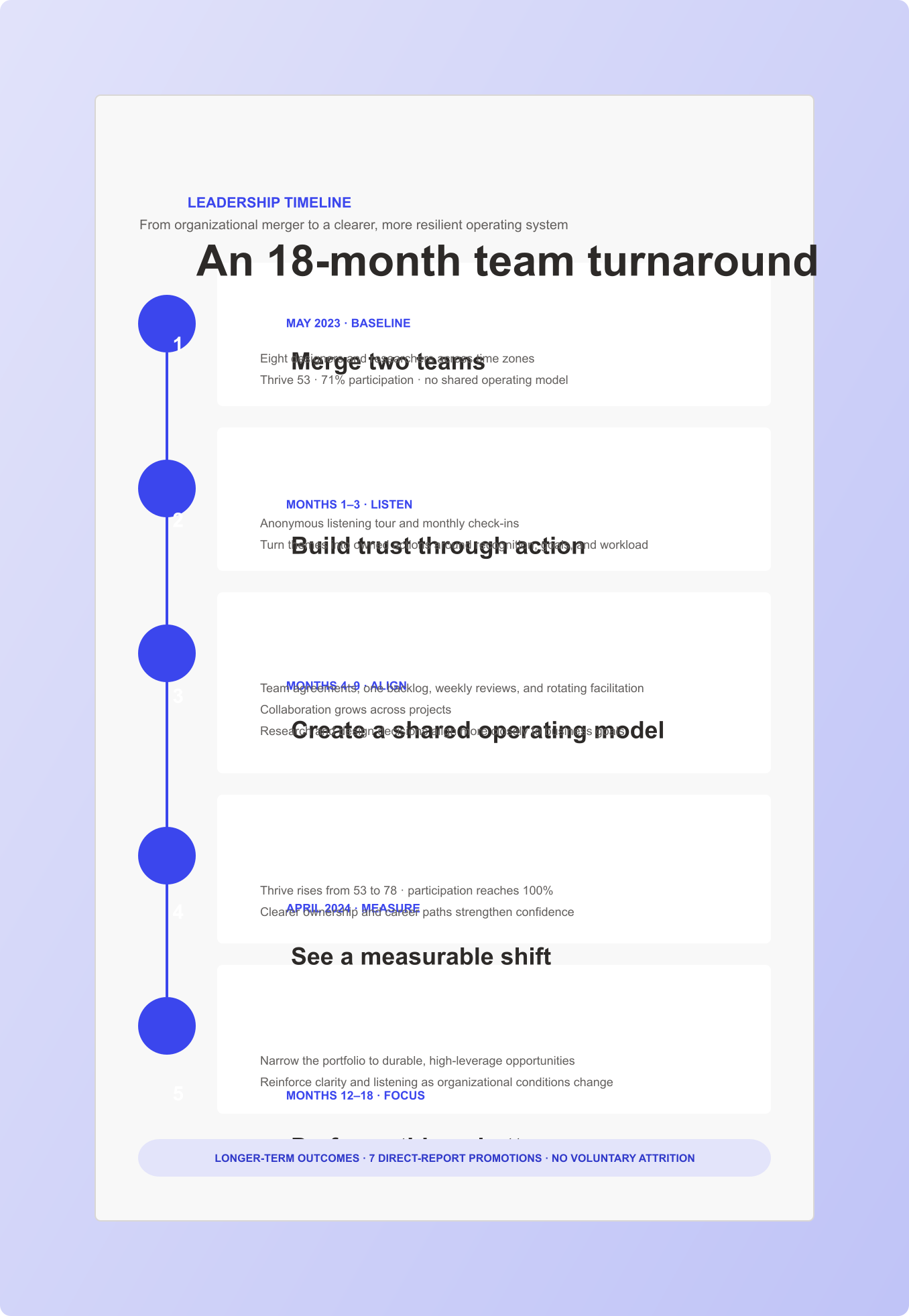 The operating system evolved in stages; longer-term talent outcomes continued beyond the 18-month turnaround.
1. Turn listening into visible action
What I implemented
- I delegated an anonymous listening tour to a trusted senior IC outside the team, creating a channel for feedback that did not depend on people speaking candidly to their manager.
- I introduced monthly 1:1 check-ins informed by Signals themes between formal survey cycles.
- Together, we converted themes into owned actions around recognition, workload, goals, and remote collaboration.
This closed the gap between hearing a concern and showing what changed. It also gave me earlier warning when workload or organizational uncertainty began affecting the team.
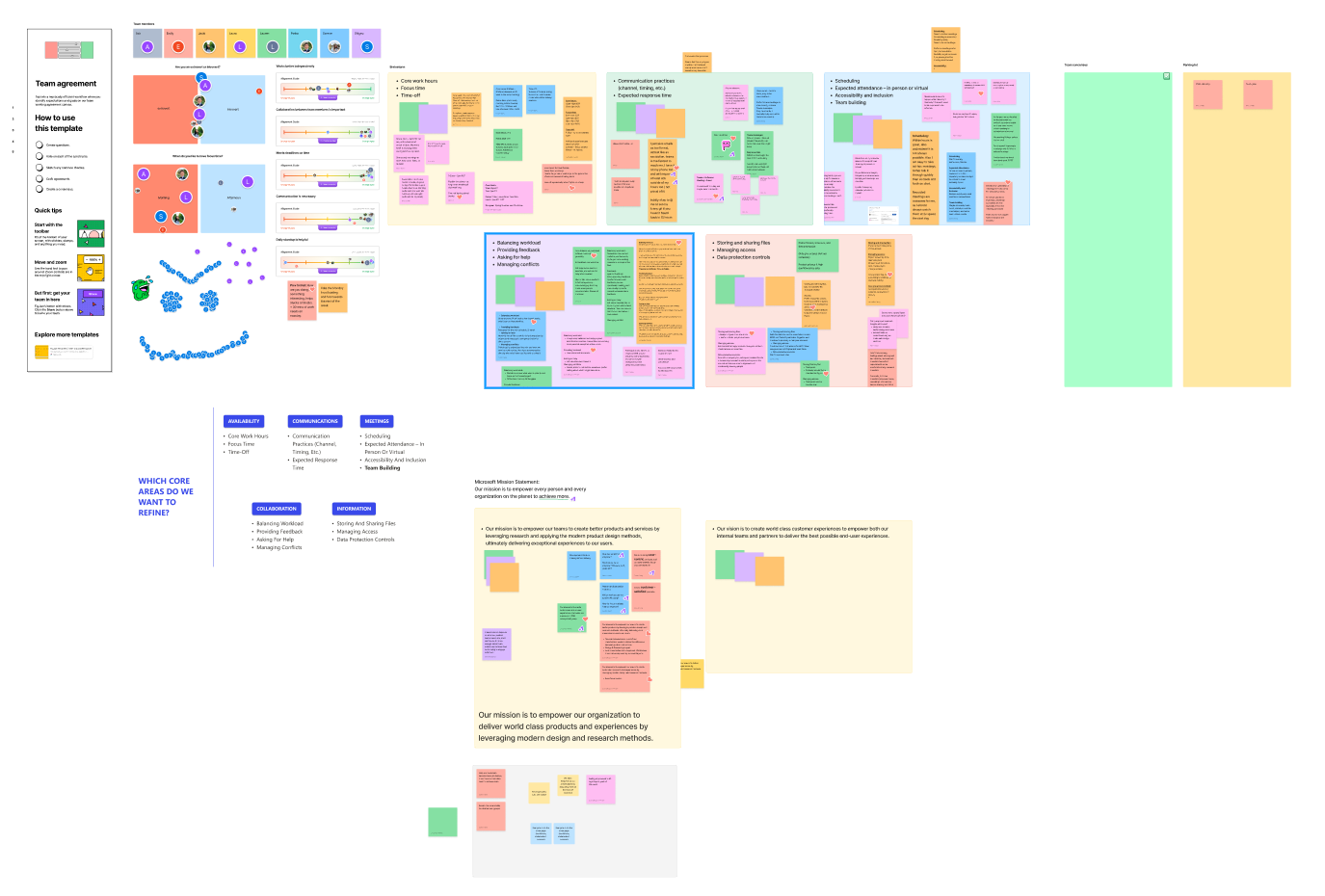 Team Agreements and Listening Tour notes
2. Distribute ownership
What I implemented
- Each IC owned an improvement lane such as onboarding, recognition, or process refinement.
- Facilitation rotated across team syncs, reviews, and retrospectives.
- Actions had named owners, timelines, and visible follow-through.
The team gained direct ownership of its culture. That responsibility also developed leadership range and reduced dependence on me as the sole source of momentum.
The behavior change became visible across project boundaries. Team members approached feedback with more of a growth mindset, collaborated with colleagues outside their immediate assignments, and connected design and research decisions more tightly to business goals.
3. Make the work predictable
What I implemented
- I led the co-creation of team agreements for collaboration across time zones.
- I consolidated work in a shared Azure DevOps backlog and introduced a weekly standup.
- Weekly design reviews and progress reviews every four to six weeks made decisions and follow-through visible.
By February 2024, every issue within our control had an owner, a timeline, and a visible path forward. Predictability reduced ambiguity for the team and made our commitments clearer to product and engineering partners.
4. Connect growth to opportunity
What I implemented
- I introduced promotion Q&As, career workshops, and more explicit development conversations.
- We used shared feedback models to make critique more direct and useful.
- A team book club created a low-stakes place to build common language around growth and feedback.
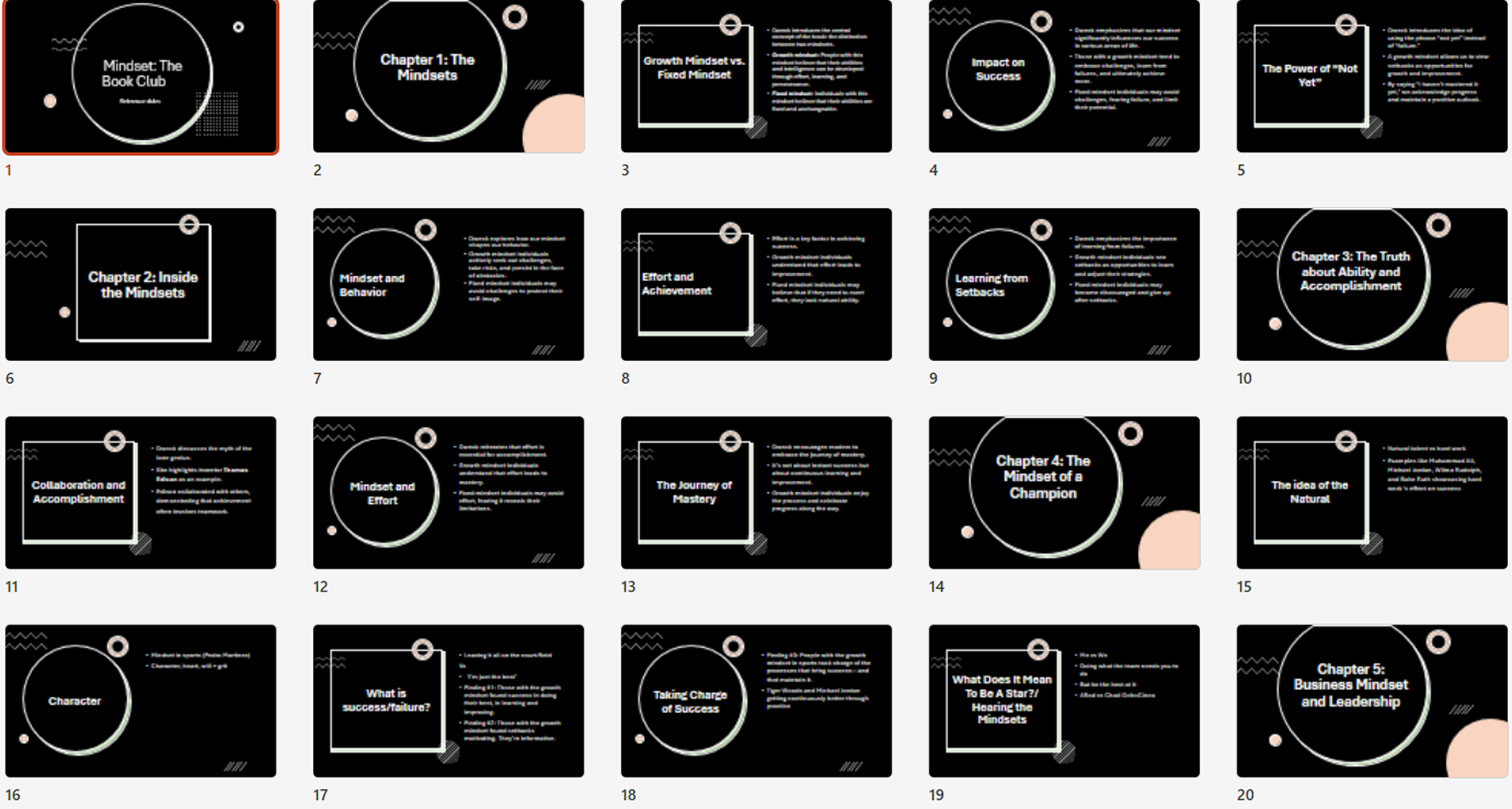 Book club: We read the book Mindset, by Carol S. Dweck, Ph.D. among others
The clearer system helped people understand the promotion bar, get actionable feedback, and take on work that demonstrated readiness. Over two years, seven of my direct reports were promoted, spanning early-career levels through Senior. One Senior designer advanced to Principal, a particularly demanding promotion that requires evidence of sustained influence beyond an individual product area.
For me, this is a core management outcome: growing the next generation of leaders who can raise the quality and influence of the organization without depending on my direct involvement.
5. Evolve from stability to impact
Once trust and clarity improved, I used the same system to raise craft quality and focus the team’s limited capacity.
Fewer, higher-impact projects
We moved from scattered commitments to a smaller set of strategic investments in engineering-system fundamentals such as security, quality, and compliance, plus core Windows experiences.
The clearest example was Windows power and sustainability. I identified it as our strongest opportunity to connect customer needs, PC performance, and Microsoft’s sustainability goals. My team owned the UX across the different power modes: defining workflows, making pixel-level interaction decisions, and conducting research to ensure the new energy models made sense to customers. Those experiences shipped as part of Windows, which serves more than 1.5 billion devices.
The hard tradeoff
With fewer resources, I reduced scope in areas that sat farther from our team organizationally, where it would have been difficult to sustain influence or follow through over time. I prioritized opportunities where helping internal product teams succeed could create a multiplier effect, especially workflow improvements that made engineers more efficient.
Pulling back from historically supported work put real strain on relationships with several partner leaders. I negotiated those changes directly: explaining the resource constraints, setting clear criteria for the work we would accept, and defining what future collaboration could look like. Clear boundaries, consistent communication, and stronger delivery on the retained portfolio eventually reset expectations without burning bridges.
"Your ability to prioritize and drive alignment elevated the team’s impact across the organization."
— Cross-Functional Partner
Raise craft rigor
Structured reviews and stronger research practices brought product priorities, evidence, and design decisions together earlier. That led to better work selection, fewer late changes, more consistent execution across projects, and greater trust from partners. The operating cadence integrated craft quality into delivery.
Results and validation
Engagement and retention
- April 2024: Thrive reached 78, up from 53, with 100% participation.
- Seven promotions reflected stronger development paths and increasing scope.
- No voluntary attrition during layoffs and repeated organizational change.
The progress was not linear. Thrive later fell during another structural change and began recovering the following cycle. I responded by continuing to create clarity, making space for every person to be heard, and resisting the temptation to replace durable practices with a quick morale intervention. Cultural transformation requires patient, daily reinforcement. A strong team system can improve resilience and recovery, but it cannot remove the effects of sustained organizational volatility.
Product & delivery impact
- Windows power and sustainability: The team designed end-to-end workflows and detailed interactions across Windows power modes, then researched whether the models were understandable to customers. The resulting experiences shipped in a product serving 1.5B+ devices.
- Internal lifecycle management: The team helped service owners prioritize critical lifecycle events that keep services secure and compliant. More actionable dashboards and reports, plus streamlined entry points, made it easier to identify priorities and act quickly.
- Portfolio quality: Concentrating resources on fewer strategic bets improved the quality of delivery and strengthened partner confidence in the team.
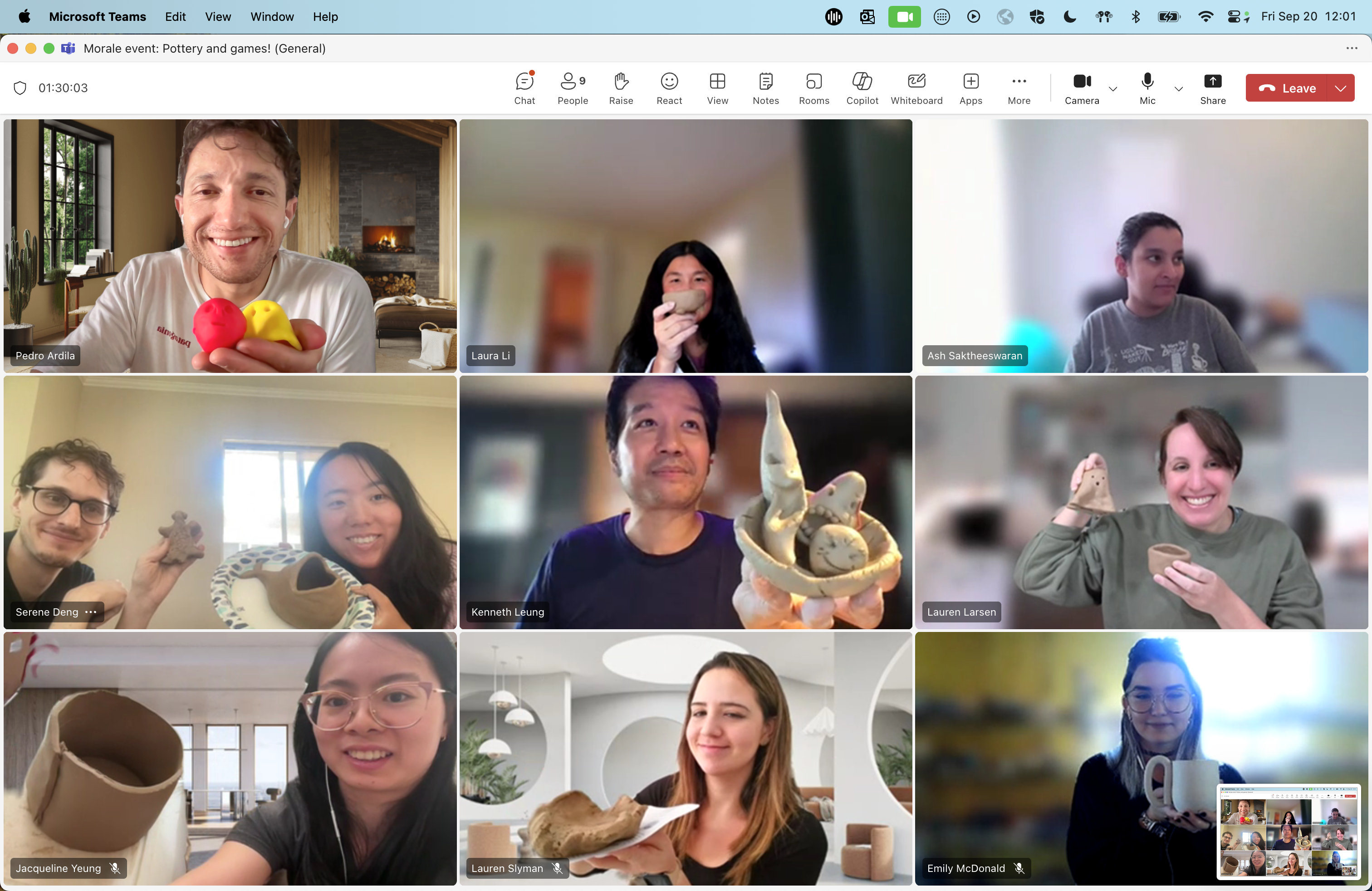 Remote morale event
What I learned
- Listening earns trust only when it produces visible action.
- Delegation develops leaders while distributing responsibility.
- Durable culture is built daily. During volatility, consistency and patience sustain the practices people rely on.
- Operating clarity creates room for better craft. Predictable priorities and decision paths let designers spend less energy navigating ambiguity.
- Team health and product delivery reinforce each other. A better survey score mattered because it reflected a team increasingly capable of making strong decisions across high-stakes products.
The lasting outcome was a team with clearer ownership, stronger leaders at every level, and a more deliberate connection between its capacity and the work it chose to take on. The system did not make the organization less volatile. It made the team better able to navigate that volatility together and still deliver consequential work.
Tags